Through the Ipswich window
...a little bit of Ipswich history for you.

I found out a new thing recently.
There is such a thing as an ‘Ipswich window.’
An Ipswich window is a type of oriel window - a style of bay window found on a building’s upper floor, which projects out from the main wall and doesn’t reach all the way to the ground. Oriel windows give you a panoramic view, and add character and space too. They’re quite common in historical architecture.
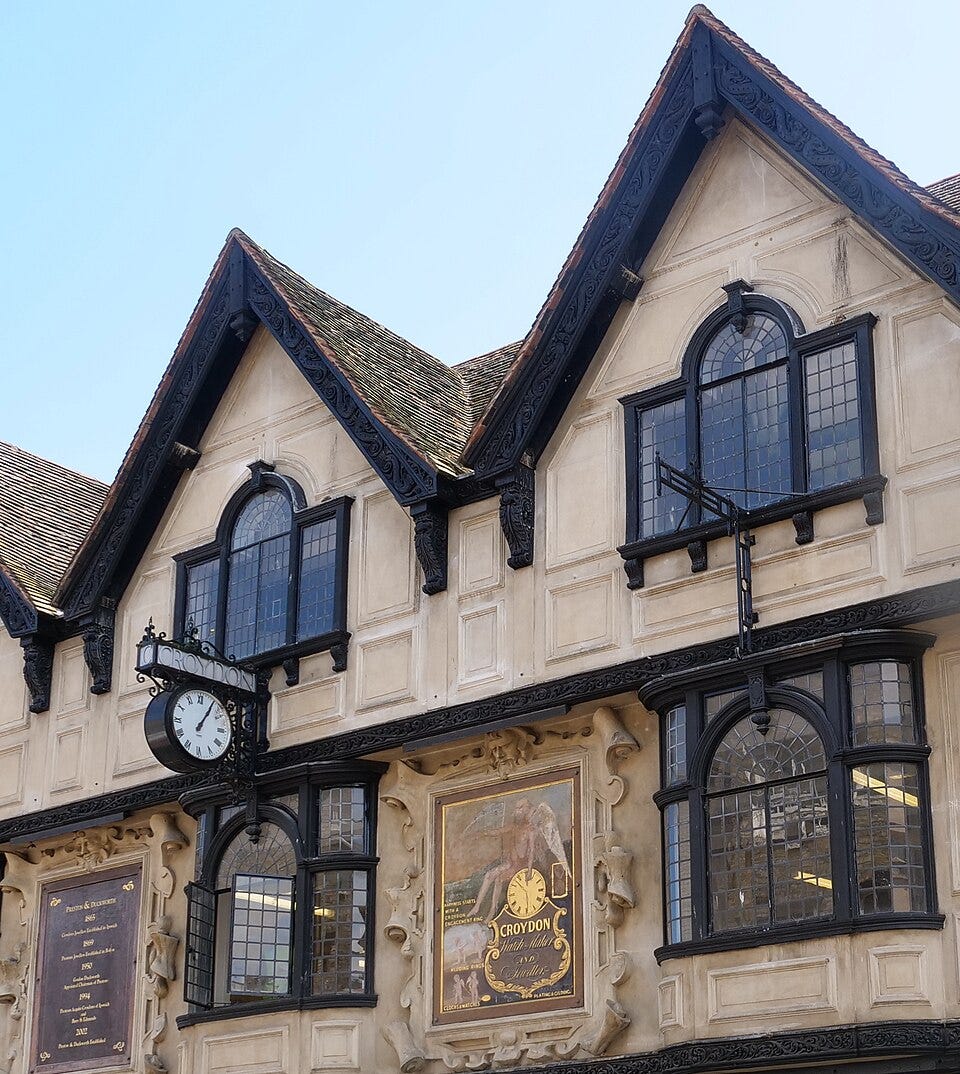
But the main feature of the Ipswich window which sets it apart from the standard oriel window design is the way the glazing bars are designed. A true Ipswich window is like a Venetian window, but with a rectangular frame enclosing an arch-shaped window which is flanked by vertical side panels, a horizontal glazing bar across the arch dividing it into smaller panes, and small panes above the arch set within the rectangular frame.
The Ipswich window design didn’t actually originate in the town. It was first seen in London in the mid-seventeenth century but soon caught on in provincial towns like Ipswich. There are some gorgeous examples of this design on Ipswich’s Ancient House (also known as Sparrowe’s House, or the Buttermarket shop that was once a bookshop and then Lakeland) - and because of this famous example in Ipswich town centre, architectural historians started to call them ‘Ipswich windows’.
The old Croydon’s jewellery shop on Tavern Street, featured flat and oriel versions of the design in its 1920s frontage. It’s now a Tesco Express and a Fone World.
Some of the buildings on Dial Lane and St Margaret’s Plain feature smaller examples.
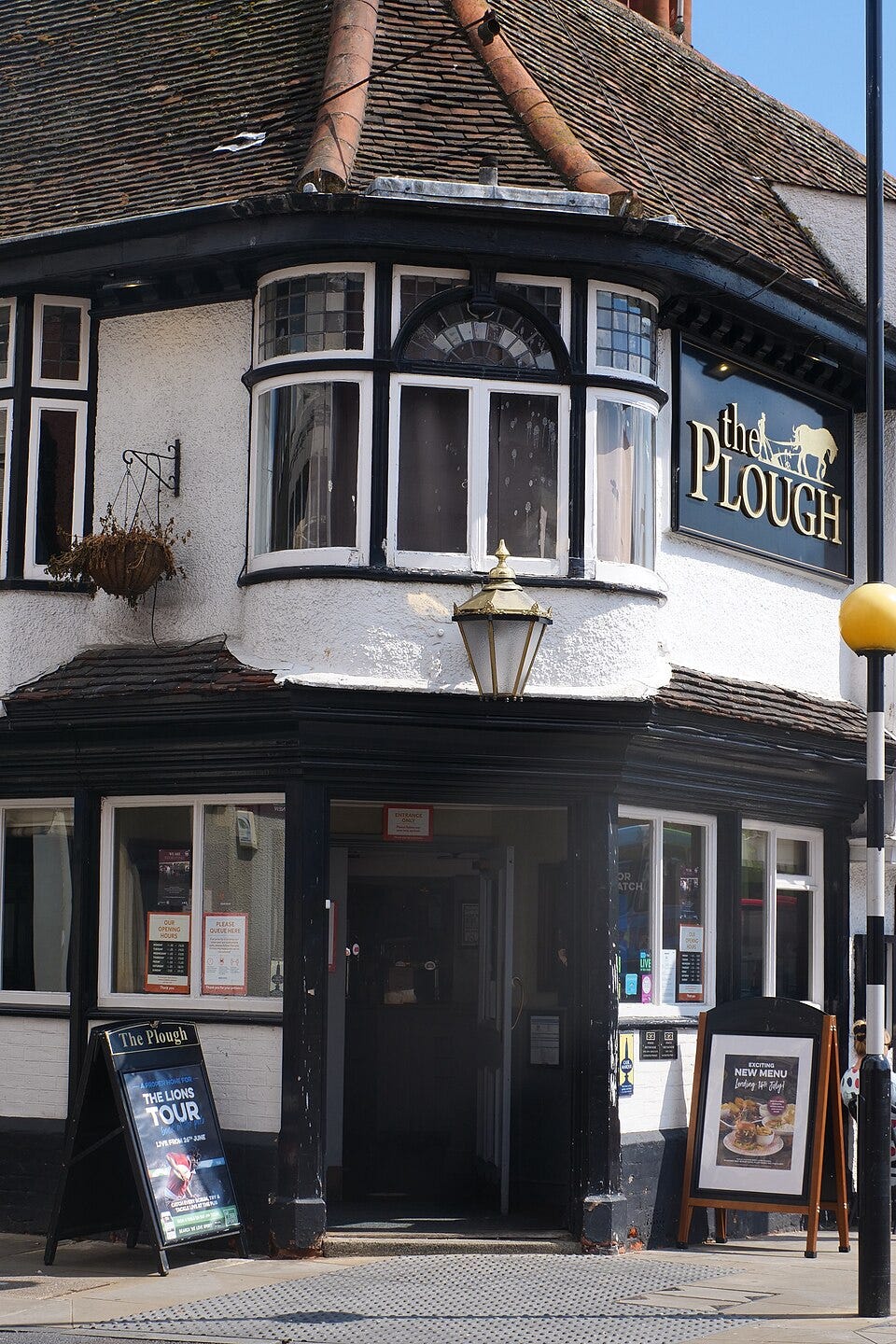
The Plough on Dogs Head Street has one, too.
Now I want to hunt down some other examples, and take pictures…